
Bridging Loans Austria: Short-Term Finance from €500,000 for Corporate and Institutional Borrowers
Page last reviewed: November 2026.
Austria bridging loans are short-term facilities secured on property, repaid on sale or refinance. We arrange them from €500,000 up to €500m+ for developers, institutional investors, funds, family offices and corporate borrowers, with terms of 3 to 24 months and gearing up to 70% of the lender’s valuation. This is unregulated commercial lending, not finance for buying a home to live in.
Austria Bridging Loans at a Glance
| Loan size | From €500,000 to €500m+, with syndicated lending available on request for larger requirements |
|---|---|
| Term | Typically 3 to 24 months |
| Gearing | Up to 70% of the lender’s valuation, depending on the asset and the exit |
| Borrower | Companies and corporate structures, including SPVs, holding companies, funds and family office vehicles |
| Security | First charge over the property |
| Interest | From around 0.9% a month, usually retained or rolled up |
| Arrangement fee | Typically 1% to 2% of the facility |
| Currency | Euro |
| Timeline | Typically four to ten weeks |
All figures are a general guide only. Final terms come from the lender after it has reviewed the asset, the borrower and the exit.
The Austrian Property Market and Short-Term Finance
Austria combines a deep, stable city market in Vienna with a strong resort and second-home market in the Alps. Banks lend mainly on long-term, relationship-based terms, which leaves a gap when a buyer or owner needs a faster, asset-led facility with a defined exit. That is where bridging fits.
Our lenders assess the property, the structure and the exit rather than a bank’s standard criteria. Local counsel handles the Austrian legal process, and matching the asset to the right lender matters more than comparing headline rates.
Where Austria Bridging Is Used
- Completing a purchase while a refinance or the sale of another asset is still in progress.
- Buying through a holding company or SPV where timing is tight.
- Refinancing a maturing loan when the replacement lender has not finished its process.
- Releasing capital from an unencumbered building for other investments.
- Funding a refurbishment or conversion before a sale or refinance.
- Securing a development site while planning or construction finance is arranged.
- Bridging a fund’s capital call or the release of sale proceeds.
Who Can Borrow
We lend to companies and corporate structures: limited companies, SPVs, holding companies, funds and family office vehicles. Lenders look through the structure to the owners, so the ownership chain, source of funds and the people behind the company must be clear. Facilities are not offered to individuals borrowing in their own name.
Property Types We Arrange Bridging Against
Lenders favour assets that are easy to value and easy to sell. We arrange bridging against:
- Apartment blocks and mixed-use buildings, including period buildings in central Vienna.
- Offices and commercial property, let or part-let.
- Retail and high-street units with a clear income or sale route.
- Hotels and resort property, including Alpine hotels and chalet developments.
- Residential developments, completed or near completion.
- Logistics and industrial property on main transport routes.
- Land, where there is a clear route to development or sale.
Unusual assets can still be funded where the exit is strong.
Security and the Land Register
Lenders take a first charge over the property, registered in the Austrian land register (the Grundbuch) by local lawyers. If a client has a property portfolio, the lender can take charges over properties in other countries on request, subject to credit team review. Austrian law also differs between the nine federal states, and rules on foreign buyers can apply in some regions, so every borrower should take independent legal advice. We do not give legal advice.
Valuation
The lender orders its own valuation from an approved valuer, and the loan is sized against that figure, not the purchase price. Resort and period property can value very differently between valuers, so allow time for this early. A strong valuation supports the gearing level.
Currency and Cross-Border Borrowers
Facilities are in euros, which suits most Austrian transactions. Borrowers based outside Austria, including foreign companies and funds, can be considered where the structure and source of funds are fully documented.
Exit Strategies Lenders Accept
- Sale of the property, supported by agent appraisals and comparable sales.
- Refinance with a longer-term lender once the asset is stabilised.
- Sale of another asset or investment.
- Release of fund proceeds or sale of a business.
- Completion of a development or refurbishment and sale of the units.
The more specific and documented the exit, the better the terms.
What Lenders Look At
- The security: value, condition, location, title and how easily it could be sold.
- The borrower: track record, standing and how clearly the structure is documented.
- The purpose: why the loan is needed and how complex the transaction is.
- The exit: how it will be repaid, how certain that route is, and what could go wrong.
A weak exit is the most common reason lenders decline or reprice.
Bridging Across Vienna, Salzburg, Innsbruck and the Alps
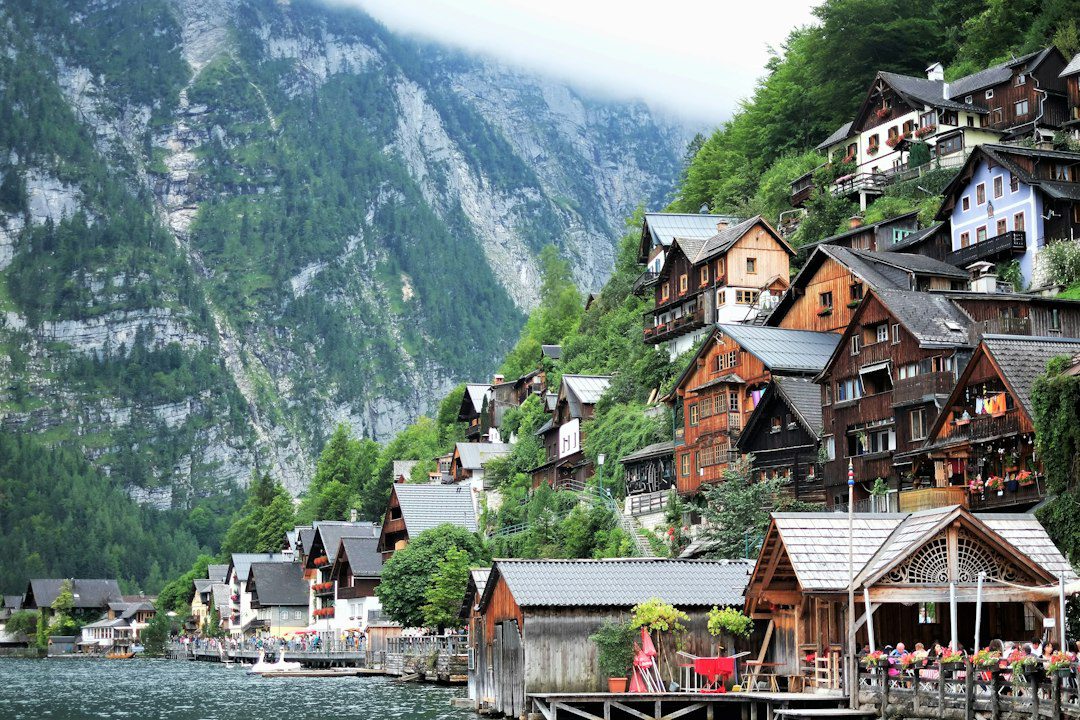 Most enquiries are for Vienna, where residential, office and mixed-use buildings are most liquid. Salzburg, Graz, Linz and Innsbruck also come up regularly, along with the resort areas of Tyrol, Vorarlberg and Salzburgerland, including Kitzbühel, Lech and Zell am See.
If your asset sits outside these areas, send us the details anyway. Lenders assess the asset, the title and the exit rather than a fixed list of places.
Bridging Compared With a Bank Loan
| Bridging loan | Bank loan | |
|---|---|---|
| Purpose | Short-term funding to a defined exit | Long-term ownership or investment finance |
| Term | 3 to 24 months | Often many years |
| Decision basis | The asset, the structure and the exit | The bank’s criteria and the client relationship |
| Speed | Typically four to ten weeks | Often longer |
| Cost | Higher monthly pricing | Lower pricing over a longer term |
Where a borrower wants to hold the asset long term, the usual plan is to refinance into longer-term finance as the exit.
A Worked Example
The figures below are illustrative only and do not represent an offer or a real case.
A property fund is buying an office building in Vienna for €15,000,000, which the lender values at the same figure. At 60% gearing, the facility is €9,000,000, with €6,000,000 from the fund. Pricing of 0.9% a month, rolled up over 12 months, gives interest of about 10.8% of the facility, around €972,000. A 1.5% arrangement fee is €135,000. The exit is a refinance with a longer-term lender in month 12.
Real terms depend on lender feedback on the specific deal. If the valuation came in lower, the facility would reduce in proportion.
Costs, Rates and Terms
Pricing varies with the lender, asset, gearing and exit, and is usually quoted per month. As a general guide:
- Interest: from around 0.9% a month for strong assets, rising for higher gearing or less certain exits. Usually retained or rolled up.
- Arrangement fee: typically 1% to 2% of the facility. Some lenders also charge an exit fee.
- Third-party costs: valuation, legal and notary fees, set out in the offer letter.
- Term: usually 3 to 24 months.
Figures for your deal come from live lender feedback, not from this page.
Risks to Understand
- Bridging costs more per month than long-term finance, so keep the term short.
- If the exit is delayed, interest keeps accruing.
- A lower valuation reduces the amount advanced.
- Resort property can take longer to sell than city property.
- Cross-charges over other properties put those assets at risk if the loan is not repaid.
Take independent legal and tax advice before you commit.
From First Call to Completion
- Initial summary. You describe the asset, the structure and the exit.
- Lender approach. We take your case to suitable lenders.
- Heads of terms. The lender issues credit-backed heads of terms.
- Due diligence. The lender instructs valuers and lawyers.
- Documents. You provide supporting documents.
- Offer. Credit approves and the lender issues a binding offer.
- Completion. Lawyers complete and funds are released.
Allow around four to ten weeks on most deals.
Documents to Have Ready
- Company and ownership structure details
- Identification and source of funds for the owners
- Property and land register details
- Evidence of the exit
- Accounts or financial statements
- Any existing loan statements
Common Reasons Austria Bridges Stall
- An exit that is not evidenced.
- A valuation lower than expected.
- Ownership structures that are not fully documented.
- Regional foreign-buyer rules that were not checked early.
- Delays in legal work or document returns.
How We Can Help
We arrange the facility, present the case, manage lender feedback and keep the process moving to completion. Tell us about the asset, the structure and the exit, and we will tell you what is possible. Our wider international bridging loans overview explains how the markets we cover fit together.
Frequently Asked Questions
How much can I borrow with an Austria bridging loan?
From €500,000 to €500m+, up to 70% of the lender’s valuation. Larger deals can be syndicated on request.
How long can a bridging loan last?
Typically 3 to 24 months.
Is Austria bridging regulated?
No. Our bridging loans are unregulated.
Who can borrow?
Developers, institutional investors, funds, family offices and corporate borrowers.
Do you lend to individuals?
No. We lend to companies and corporate structures.
How fast can it complete?
Typically four to ten weeks.
Do you need a first charge?
Yes. Lending is secured by a first charge over the property.
What are the costs?
Interest from around 0.9% a month, an arrangement fee of typically 1% to 2%, plus valuation, legal and notary costs.
Can I bridge against property in another country?
If a client has a property portfolio, the lender can take charges over properties in other countries on request, subject to credit team review.
Can a foreign company or fund borrow against Austrian property?
Yes, where the structure and source of funds are documented and local rules on foreign buyers are met.
What happens if my exit is delayed?
Speak to us early. Lenders will consider an extension where the plan is still sound, but terms and costs may change.
Can the loan be repaid early?
Many lenders allow it. We confirm the terms in the offer letter, including any exit fee.
Bridging Loans in Other Countries
We also arrange bridging finance across Europe, the Middle East and Asia, including Germany bridging loans, France bridging loans, Spain bridging loans, Italy bridging loans, Netherlands bridging loans, Portugal bridging loans, Ireland bridging loans, Switzerland bridging loans, Luxembourg bridging loans, Monaco bridging loans, Singapore bridging loans, Hong Kong bridging loans and Dubai bridging loans.
Describe the asset, the structure and the exit, and we will tell you what the Austrian market is likely to offer.