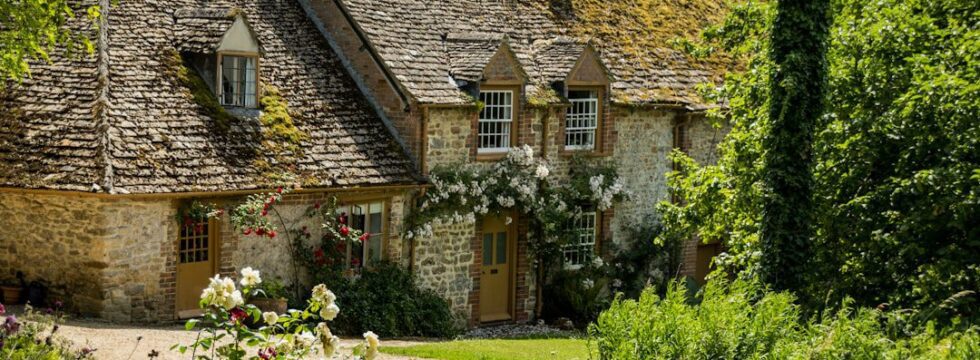
Average thatched property insurance premiums have risen from around £598 to over £2,404 in the space of four years – a genuine increase of more than 300% – and several major specialist insurers have withdrawn from the thatch market entirely during 2026. If you own, or are considering buying, a non-standard construction property, understanding why standard insurers decline it, and what’s actually happening in this market right now, matters considerably.
Why Standard Insurers Simply Won’t Touch These Properties
Most mainstream home insurance policies are priced and underwritten around conventional brick or stone construction with a tiled or slate roof – the format the vast majority of UK homes follow. Anything genuinely outside this triggers automatic decline from most standard insurers’ systems, not because the property is unsound, but because their underwriting models simply aren’t built to price the genuine risk involved. Our Home Insurance page covers what standard buildings cover generally needs to include; this page focuses specifically on why non-standard properties fall outside that standard framework.
Thatch: A Market Genuinely in Crisis Right Now
Of the roughly 60,000 thatched properties in England, around 80% also carry listed status, compounding the insurance challenge considerably. It’s worth understanding this isn’t a stable, mature market – premiums have risen dramatically over a short period, and several established specialist providers have genuinely exited the thatch insurance market entirely during 2026, narrowing the realistic pool of insurers willing to quote at all. If you’re buying a thatched property, it’s worth getting a genuine, current quote before you commit to a purchase, rather than assuming historical premium levels or provider availability still apply.
The Genuine Danger in Using a Generic Rebuild Cost Calculator
This is a genuinely important technical warning worth understanding clearly: online rebuild cost calculators, including widely used industry tools, can produce dangerously low reinstatement figures for thatched and listed properties specifically, since these generic tools aren’t built to account for the genuinely higher cost of specialist materials, skilled thatchers, and heritage-appropriate methods a proper rebuild requires. Using an inaccurate, too-low figure risks genuine underinsurance, meaning any claim payout could be reduced proportionally even for a partial loss. It’s worth commissioning a proper, property-specific rebuild valuation from a surveyor experienced in this kind of construction, rather than relying on a generic online tool.
Timber Frame: Now Largely Mainstream, But Not Universally
Modern timber frame construction built to current building regulations is now widely accepted by standard insurers, though it’s worth knowing this can still attract a genuine premium loading, commonly in the region of 10-15% above an equivalent brick-built property, given the different fire and moisture risk profile involved. Older timber frame properties, particularly those built before the 1980s, face considerably more scrutiny, and it’s worth disclosing the property’s genuine age and construction method clearly at quote stage rather than assuming modern timber frame terms automatically apply.
Flat Roofs: Why the Actual Proportion Genuinely Matters
It’s worth understanding that insurers typically apply a threshold, commonly around 25-30% of total roof area, above which a property is treated as having a genuinely flat roof for underwriting purposes, triggering additional scrutiny or a specialist route. A property with a small flat-roofed extension is generally treated quite differently to one where the majority of the roof is flat, so it’s worth having this genuinely measured and disclosed accurately rather than estimated.
Post-War Prefabricated Homes: Still Occupied, Still Genuinely Complicated
An estimated 156,500 prefabricated homes built between 1945 and 1958 remain occupied across the UK today, including specific types like Airey, British Iron and Steel Federation (BISF), Wimpey No-Fines, and Reema construction. Several of these specific types were formally designated as defective under the Housing Act 1985, and it’s worth knowing that both mortgage and insurance providers will typically want evidence of proper certified repair before offering standard terms – without this certification, both financing and insuring the property can genuinely be difficult. Our Non-Standard Construction Mortgages page covers the mortgage side of this specific category in more depth, worth reading alongside this page since the certification requirement genuinely affects both your financing and your insurance simultaneously.
Why Full, Accurate Disclosure Matters More Here Than Almost Anywhere Else
It’s worth being completely upfront about every non-standard element of your specific property when applying for insurance – even a partial or unusual feature, like a single flat-roofed extension on an otherwise conventional house, needs disclosing accurately. Non-disclosure, even unintentional, risks a future claim being reduced or rejected entirely at exactly the point you’d need it most.
Listed Buildings: A Genuine Additional Layer
If your non-standard property also carries listed status, our Listed Buildings Mortgages page covers how listing grade affects your realistic lender pool; insurance for listed property carries a genuinely similar consideration, since any repair work typically needs to use like-for-like materials and methods approved for the property’s specific listing, which standard insurance simply doesn’t account for in its pricing or claims process.
Rural Properties: Where Non-Standard Construction Is Genuinely Common
Many rural properties – farmhouses, converted barns, cob cottages – combine non-standard construction with genuine acreage or agricultural ties, adding a further layer of consideration beyond insurance alone. Our Rural Mortgages page covers how acreage and agricultural occupancy conditions are assessed for mortgage purposes, worth reading alongside this page if your property combines both a rural setting and a non-standard build.
Why Checking This Before You View a Property Genuinely Helps
Our piece on how to spot if your dream home is genuinely mortgageable covers checking construction type before you invest emotional energy in a specific property – the same principle applies just as strongly to insurance, since discovering a genuine insurance obstacle after you’ve fallen for a property is a considerably harder position than checking beforehand.
Finding a Specialist Insurer
Given how narrow the pool of willing insurers can be for genuinely unusual construction, particularly in the current thatch market, it’s worth working with a broker experienced specifically in non-standard property insurance, rather than approaching a mainstream provider and receiving an automatic decline. A specialist broker will also generally understand which insurers are still genuinely active in a given niche, rather than you discovering a provider has withdrawn only after applying.
What a Proper Survey Genuinely Adds to Your Insurance Application
A full structural survey, commissioned specifically for the property’s actual construction type, gives both you and a specialist insurer genuine clarity on condition and likely maintenance costs, and can meaningfully help a specialist insurer price a policy more accurately than relying on a generic assessment alone.
Getting Cover That Genuinely Reflects Your Property
Given how much genuinely depends on your specific construction type, its condition, and current market appetite – which is shifting meaningfully in categories like thatch right now – it’s worth getting a proper, current quote from a specialist provider before assuming either that cover is unavailable, or that historical pricing still applies. Get in touch with details of your property’s construction, and we’ll help you find cover genuinely suited to it.
Frequently Asked Questions
Why won’t a standard insurer cover my non-standard construction property?
Most standard policies are priced around conventional brick or stone construction, and their underwriting models simply aren’t built to assess the genuine risk profile of non-standard materials.
Is thatched property insurance genuinely getting harder to find?
Yes – premiums have risen by more than 300% over four years, and several major specialist insurers have withdrawn from the market entirely during 2026.
Can I trust an online rebuild cost calculator for a thatched or listed property?
Generally not – these tools can produce dangerously low figures for specialist construction, risking genuine underinsurance, so a proper property-specific valuation is worth commissioning instead.
Is modern timber frame difficult to insure?
Generally not – it’s now widely accepted, though it can still carry a premium loading of around 10-15% above an equivalent brick-built property.
What happens if my property is a designated defective prefab type?
Both mortgage and insurance providers typically want evidence of certified repair before offering standard terms, without which both financing and insuring the property can be genuinely difficult.
Get in touch with details of your property’s construction, and we’ll help you find insurance genuinely suited to it, alongside your mortgage needs.